
How to Build Nomad-Friendly Co-Living Hubs Worldwide
A booming market meets design-led, tech-enabled operations—here’s how to build scalable, occupancy-stable co-living for digital nomads. Global co-living market size was USD 7.82B in 2024 and is projected to reach USD 16.05B by 2030, a CAGR around 13.5%. That trajectory is fed by demand for location-flexible housing, community support, and integrated services.
Across properties, occupancy rates hover around 93-94%, showing that when private spaces, coworking zones, and wellness areas are balanced, people stay longer. To replicate this, study models from Selina, Outsite, and Noma Collective—each player tailors onboarding, community programming, and pricing to different markets.
Execution path: design modular spaces that scale, install a practical tech stack (property management software, smart access), and deploy IoT-enabled energy and maintenance systems. IoT transforms coliving spaces by automating security, climate, and usage analytics, slashing manual tasks and boosting uptime. Build an ROI framework around occupancy stability, unit economics, and post-setup metrics (retention, referral, NPS). Run a 6–12 month pilot in 1-2 hubs, then stage a global rollout with standardized operating playbooks and partner ecosystems.
Read on to get concrete steps you can apply today and start building nomad-ready hubs that scale.
What the research reveals about nomad-friendly co-living
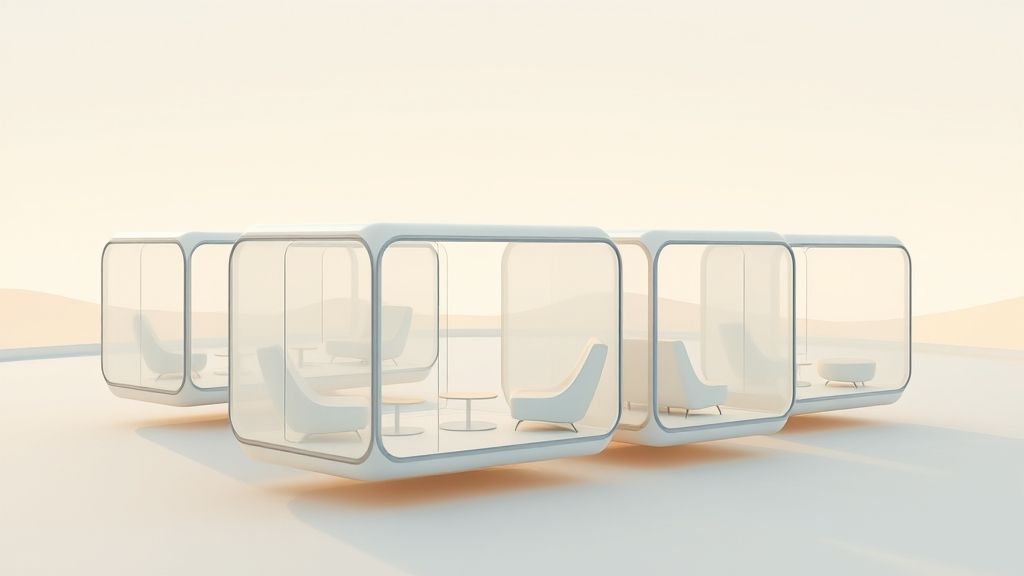
Market momentum around nomad-friendly co-living is accelerating as operators blend private spaces with shared work and wellness facilities. Industry forecasts place the global co-living market on a growth trajectory toward approximately $13.93B by 2027, underscoring a durable demand for turnkey setups that combine convenience, community, and predictable bills. Platforms that aggregate residents and spaces—like Coliving.com, which connects 97,000+ members across 360 cities—signal a scalable, network-driven model for operators seeking rapid geographic expansion.
In the UK, urban shared housing remains a sizable segment, with about 1.7 million renters, 72% of whom are aged 26–40 and the largest cohort 31–35 at 35%. The price dynamic also favors all-inclusive coliving, where rents in London tend to be roughly 7% below private rented sector (PRS) and about 14% below build-to-rent (BTR) when utilities and amenities are bundled into one bill. These signals point to a compelling value proposition for operators who can deliver consistent service, transparent pricing, and community-driven experiences.
Tech-enabled operations: automate rent payments, maintenance requests, smart lighting, and security; use centralized dashboards to optimize occupancy
Turnkey operations rely on four core capabilities: automated rent payments, streamlined maintenance, smart building systems, and a centralized dashboard that provides real-time visibility into occupancy, churn, and service levels. Operators can leverage Spacebring to automate lease management, rent invoicing, and payment processing, freeing staff to focus on member experience. PadSplit demonstrates a scalable, all-inclusive pricing model tied to individual rooms, with a platform that supports tenant onboarding and routine tasks, reducing back-office friction. Coliving platforms and communities—such as Coliving.com—offer centralized hubs for community management and analytics, enabling operators to monitor engagement and occupancy across 360+ cities.
Tip: start with a minimal viable tech stack: automated payments, ticketing, and a single dashboard to track occupancy and service levels. Expand into smart lighting and security once operations prove scalable.
Actionable steps to implement now:
- Pilot automated rent collection and maintenance requests in one building, then scale to others as you validate processes.
- Adopt a centralized dashboard that aggregates occupancy, payments, and service tickets; set thresholds for proactive interventions.
- Partner with a property-management platform that offers a modular stack so you can add smart controls later without reworking workflows.
Balance design and community: space planning should blend private rooms with coworking areas and wellness facilities, guided by audience personas
The design of nomad-friendly co-living must strike a balance between private, quiet spaces and vibrant communal zones that support work, social connection, and well-being. Population data from UK research indicates a strong demand for shared housing among the 26–40 demographic, with the largest 31–35 cohort. To translate demographics into actionable design, implement audience personas that map daily routines, work rhythms, and social preferences to space configuration. A typical layout could include light-filled private rooms, modular coworking suites, and wellness features such as gym, lounge, and outdoor or mindfulness spaces.
Guided by concept articulation resources, operators can draft a Vision Document and Coliving Guide to communicate intent clearly to investors and partners, then translate that vision into a tangible floor plan. The integration of a design-first approach helps ensure the community elements align with occupancy goals and brand promises.
Key tactics to operationalize design decisions:
- Create four audience personas representing full-time remote workers, short-stay digital nomads, founders running remote-backed ventures, and wellness-focused residents.
- Allocate roughly 40–60% of public-space area to coworking and collaboration zones, with flexible partitions to reconfigure as needs shift.
- Embed wellness facilities at a central, easily accessible location to reinforce a holistic lifestyle offering.
Network and mentorship leverage: access Coliving Incubator Program, Vision Document Template, and Coliving Guide for concept articulation and mentorship
Strategic growth in co-living is amplified by mentorship and documented concept articulation. The Coliving Incubator Program offers structured pathways for founders to validate ideas, while templates and guides (Vision Document Template, Coliving Guide) provide a shared language for investors, operators, and residents. These resources help convert a concept into a scalable, fundable business model and reduce time-to-market for new hubs.
Practical steps to leverage these resources:
- Draft a clear Vision Document early, then refine with feedback from the Coliving Incubator community.
- Use the Coliving Guide to articulate design, staffing, and community-building strategies aligned with target personas.
- Attend incubator milestones (demo days, peer reviews) to accelerate fundraising and partner alignment.
Operational platforms: Spacebring and PadSplit streamline property and tenant management; Coliving.com connects a global community (97,000+ members in 360 cities)
To operate at scale, operators should rely on integrated platforms that unify leasing, payments, maintenance, and community engagement. Spacebring provides commercial-property-management automation for leases, invoicing, and tenant communications; PadSplit offers an all-inclusive pricing model with a streamlined tenant-management flow that supports shared living at lower price points. Coliving.com anchors a global community of 97,000+ members across 360 cities, enabling discovery, trust-building, and cross-site opportunities.
Operationally, you can synchronize these platforms to deliver a consistent experience: automate onboarding and rent, centralize tickets and energy management, and use the Coliving.com network as a sourcing and community-building engine. This alignment is essential to maintain service levels as occupancy grows and markets expand.
Market signals and growth potential: alignment with macro trends and regional data
Market forecasts and demographic data underpin a robust growth outlook for nomad-friendly co-living. Allied Market Research projects the global co-living market reaching $13.93B by 2027, reflecting expanding demand for integrated housing solutions that combine space, services, and community. In the UK, Knight Frank highlights a substantial urban shared-housing segment, with around 1.7 million renters and a strong skew toward ages 26–40 (72%), especially the 31–35 cohort (35%). These signals suggest ample opportunity for operators who deliver predictable pricing, scalable design, and a compelling community narrative.
Additional indicators point to cost competitiveness: all-inclusive London coliving rents are generally below PRS by about 7% and below BTR by roughly 14% when bundled costs are considered. This pricing dynamic strengthens the case for operator-led, service-rich spaces in major cities while offering value to nomads who want one bill, one experience, and one community hub.
Cost-model flexibility: pricing can be per room/bed or all-inclusive, supporting varied investor and tenant preferences
One of the most actionable levers for operators is pricing structure. A per-room or per-bed model paired with bundled utilities and services often yields predictable revenue and easier tenant budgeting, while all-inclusive pricing can improve occupancy by simplifying decisions for nomads who crave a turnkey lifestyle. Market observations across platforms show a spectrum—from space-level pricing plans to all-inclusive bundles—allowing operators to tailor offerings to local demand, capex constraints, and tenant expectations.
Actionable synthesis and turnkey playbook
To translate research into an immediately deployable blueprint, adopters should combine four pillars: tech-enabled operations, design-then-community, mentorship-enabled scaling, and platform-led efficiency. Start with a modular tech stack for rent automation, maintenance ticketing, and smart systems, then layer on a formulaic, persona-driven design plan to ensure spaces cater to real resident needs. Leverage the Coliving Incubator Program and templates to craft a compelling Vision Document and Coliving Guide that communicate a clear ROI thesis to investors. Finally, synchronize Spacebring, PadSplit, and Coliving.com to maintain a lean, scalable operation capable of expanding to new markets while maintaining service quality and community vitality.
In short, the research supports a repeatable, revenue-friendly model for nomad-friendly co-living: automate the boring parts, design for people, leverage mentorship, and operate with platform-backed efficiency. As markets mature, operators that combine data-driven occupancy management with cohesive design and strong community networks will exploit the strongest growth levers in a global profession that is increasingly defined by mobility, flexibility, and belonging.
Step-by-step implementation: from concept to occupancy

The following playbook translates a concept for nomad-friendly co-living into an operable, tech-enabled hub. It blends audience-centric design, a clear space program, and automation with a tight onboarding workflow, so you can move from idea to occupied beds quickly while maintaining a strong sense of community.
Market context matters: in the UK and London specifically, urban shared housing is adjusting to higher rents and evolving demand. Recent data shows private rents continuing to rise in many cities, even as operators experiment with flexible, all-inclusive models. The global co-living market is expanding—driven by demand for affordable, well-managed living and work environments—making a well-executed pilot a strong path to scale. Pair these dynamics with a structured, data-informed workflow and you can balance private space with communal energy that keeps nomads engaged and paying on time.
1. Define audience personas and identity work
Start with identity work to map who you’re serving and what they value in a nomad-friendly hub. Use Coliving’s audience frameworks to craft actionable personas that guide space, services, and programming.
- Remote worker (25–40): seeks reliable high-speed internet, private sleep space, quiet work zones, and networking opportunities. Pain points include unpredictable schedules and travel fatigue.
- Student/early career (18–28): prioritizes affordability, social onboarding, community events, and safe, compact living with study-friendly spaces.
- Professional/consultant (30–50): values professional-grade amenities, meeting rooms, wellness options, and streamlined admin for short to mid-term stays.
Steps to operationalize identity work:
- Draft 3-4 persona profiles with Job-to-be-Done statements (e.g., “as a remote worker, I need a distraction-free zone with fast Wi-Fi so I can deliver client work on a tight deadline”).
- Map needs to spaces and services: private rooms, coworking zones, wellness facilities, and events programs.
- Align pricing and onboarding with each persona’s expectations to minimize churn and maximize early engagement.
2. Select a property and craft a space program
Choose a property that supports a strong balance of privacy and community, with a layout that prioritizes private rooms, coworking zones, and wellness facilities. Your space program should scale with occupancy targets while maintaining a human-centered feel.
: prioritize soundproofing, comfortable desks, and personal storage. : flexible hot-desks, dedicated desks, collaboration lounges, and robust connectivity. : quiet rooms, fitness/nurture spaces, mindfulness corners, and access to outdoor areas where possible.
Space-program blueprint (example for a hub sized to serve 120 residents):
- Private rooms: 60–70 units
- Coworking/deskmurai: 80–110 workstations
- Wellness and fitness: 1–2 studios or multipurpose rooms
- Shared kitchens and lounges: ample communal zones for informal work and socializing
- Support spaces: reception, mailroom, maintenance hub, and on-site management office
Ground rules for design decisions: maximize daylight, ensure reliable internet (fiber where possible), and design wayfinding that helps nomads land in the right zone without friction. Consider modular furniture and adaptable layouts to support evolving community needs.
3. Choose centralized management software and define onboarding
Adopt a centralized management platform to streamline property operations, tenant data, and onboarding workflows. Spacebring is highlighted as a versatile option for property/tenant management, with capabilities spanning onboarding, maintenance, and guest/tenant portals. PadSplit offers dedicated host-facing tools and insights for micro-asset management, which can inform pricing models and flexible occupancy strategies. The Coliving Incubator Program and related Vision Document Template provide templates and guidance for launching and validating a co-living concept at scale.
Onboarding workflow (practical steps):
- Collect property data and resident eligibility criteria; configure unit types and pricing bands.
- Create tenant accounts and digital leases; enable online sign-off and welcome portal access.
- Prepare orientation kits, house rules, and community guidelines; schedule introductory events.
- Set up automated payments, key/card access, and utility monitoring integrations.
- Train staff and residents on the portal, service requests, and feedback channels.
Onboarding should be rapid and frictionless: sign-up under 2 minutes for members, with a guided tour of the platform and a welcome event to initiate social ties.
Pricing snapshots from current data (illustrative only, ranges vary by plan and region):
- Spacebring: Pricing varies by deployment scale and modules; contact sales for a tailored quote.
- PadSplit: Host fee model often described as a combination of a 10-day equivalent booking and an 8% service fee; tenant rents can range weekly (example: typically $138–$393 per week depending on room size and utilities).
- Coliving Incubator Program: Application-based; pricing not publicly published; designed to de-risk early-stage launches through mentorship and structured milestones.
4. Automate core operations: rent collection, maintenance, and energy management
Automation is the backbone of a scalable nomad hub. Configure rent collection, maintenance requests, and energy management to minimize administration and maximize resident satisfaction.
- Rent collection: automate invoicing and payment reminders; set up tiered pricing and auto-pro-ration for mid-month moves.
- Maintenance: residents submit tickets through a portal with photo uploads; automatic routing to the correct team; SLA-based escalation; real-time status updates to residents.
- Energy management: connect smart devices (thermostats, lights, sensors) to monitor usage; set automated schedules to optimize energy use and reduce operating costs.
Automation gains compound over time: a well-tuned system reduces response times, improves resident retention, and lowers operating costs—critical in a market with rising rents and tight margins.
5. Build a centralized occupancy dashboard with real-time metrics
Consolidate key indicators into a single dashboard that updates in real time. Essential metrics include occupancy rate, lease velocity, average length of stay, churn, net revenue, and energy usage/savings. A well-designed dashboard supports proactive decisions, from pricing to programming and space reallocation during peak periods.
Helpful dashboards can pull data from Spacebring and related integrations to visualize:
- Active leases and vacancy breakdown by unit type
- Maintenance backlog and SLA performance
- Energy consumption per zone and per bed
- Event participation and community engagement indicators
6. Run a design sprint to balance private spaces with communal areas and test with a pilot cohort
Execute a focused design sprint to validate the balance between private and shared spaces. Involve a pilot cohort drawn from your defined personas to observe usage, preference, and friction points in real living scenarios.
Design sprint steps:
- Map user journeys for typical days in the hub (work sessions, social events, wellness routines).
- Prototype layout and service adjustments using modular furniture and flexible zones.
- Run a 2–4 week pilot with 20–30 residents representing the main personas.
- Gather feedback on privacy, noise levels, and community activities; iterate on space programming.
- Measure impact on occupancy, retention, and satisfaction to inform a scale-up plan.
Leveraging Coliving’s incubator concepts and related community-guides can accelerate this cycle, and tapping into global events via Coliving.com can help you benchmark with peers and recruit targeted pilot participants.
7. Price and feature considerations in practice
In planning, consider a lightweight pricing and feature comparison to decide which software stack best fits your hub. The following table outlines a practical view of tools you might compare for a mid-sized nomad hub, with a focus on automation, onboarding, and tenant management.
Key market context to inform decisions: UK urban shared housing data indicates ongoing demand with rent dynamics influencing both capex and ongoing operating costs. For reference, expert analyses and market outlooks point to continued growth in co-living demand through 2027 and beyond, suggesting a favorable environment for pilot programs that prove service quality and community value.
Network assets like Coliving.com offer global events and community-building opportunities that can provide benchmarks and peer feedback as you test and scale. As you move from concept to occupancy, prioritize automation, dashboards, and a community-first design ethos to deliver a scalable, nomad-friendly hub.
Design and community balance: floor plans that work
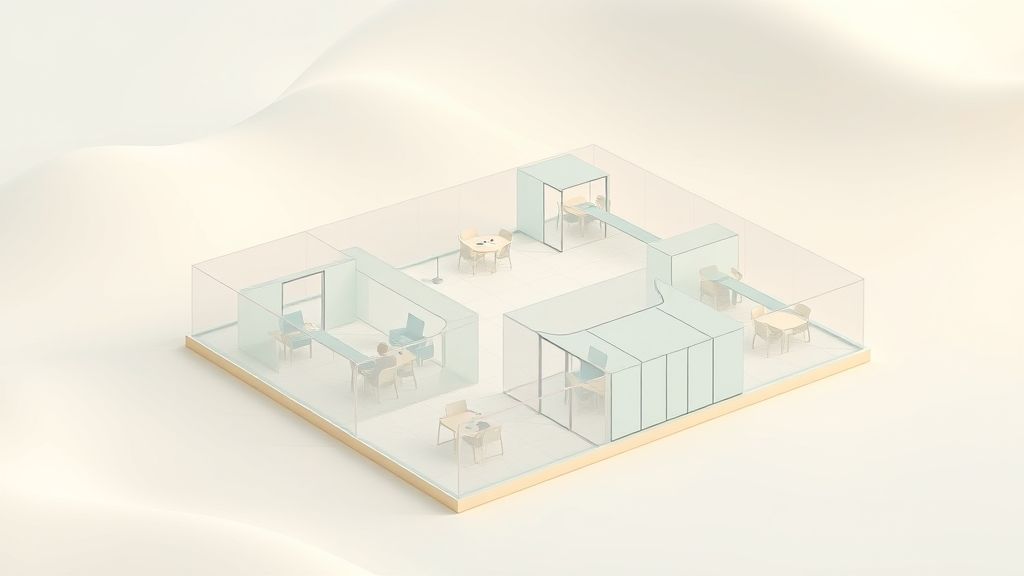
Design-led co-living starts with floor plans that natively channel quiet work alongside spontaneous collaboration. Treat the layout as a living prototype—a tested hypothesis you validate with short tenant pilots before committing to scale. The process aligns with a clear vision captured in a Vision Document Template and a practical Coliving Guide, ensuring operations and design move in lockstep. While the sector continues to mature, current market signals reinforce the case for thoughtfully balanced spaces as a driver of occupancy and satisfaction. The global co-living market was valued at USD 7.82 billion in 2024 and is projected to exceed USD 16 billion by 2030, with a compound annual growth rate around 13%—a strong incentive to get the design right up front. In markets such as the UK, planning activity for coliving surged in 2024, signaling growing demand and a need for scalable, design-forward approaches that reduce onboarding friction for new tenants.
To translate this momentum into tangible spaces, designers should pair prototype layouts with audience-driven workflows and post-occupancy engagement. The goal is to balance private, focused environments with abundant opportunities for collaboration, wellness, and social contact. By weaving in local partnerships and a global network, operators can sustain engagement, simplify operations, and continuously refine spaces based on real usage and feedback.
Prototype layouts: design-then-community
Start with a flexible “design-then-community” sequence: sketch a floor plan that accommodates quiet work zones, collaborative hubs, and transitional spaces (like micro-lounges and project nooks). Validate the concept through tenant pilots—short, limited-run experiences with 2–3 cohorts that test different densities, acoustics, and furniture options. Use the pilot data to iterate the Vision Document Template and align with Coliving Guide recommendations for shared spaces, privacy, and flow. This approach helps avoid overcommitting to a single layout while building a track record of evidence-based design decisions.
Practical steps to implement:
- Define quiet zones, collaboration hubs, and wellness corridors in the prototype plan.
- Run micro-pilots with varied occupancy levels and furniture configurations to measure comfort and behavior.
- Capture metrics on focus time, meeting density, and informal interactions to refine space standards.
- Document learnings in a living design brief tied to operator workflows and tech-enabled operations.
Space planning templates and personas
Leverage audience personas to allocate private rooms, coworking desks, and wellness spaces. Build archetypes such as Remote Workers, Students, and Visiting Professionals, each with a typical day, peak activity times, and privacy needs. Translate these personas into discrete space allocations—private rooms for deep work during core hours, 1–2-person focus pods near natural light, and collaborative zones tuned for scheduled team sessions. A Vision Document Template helps formalize these allocations and aligns them with operational workflows described in the Coliving Guide. The goal is a repeatable template that scales across markets while preserving a sense of tailored belonging for each persona.
To operationalize this, map daily rhythms to space occupancy and service touchpoints. For example, Remote Worker personas may require longer desk occupancy blocks and sound-masked zones, while Students may prioritize flexible study rooms and social study lounges. Use a modular furniture approach so spaces can morph between quiet work and small-group collaboration as needs shift. A well-defined template reduces onboarding time and accelerates community formation, which is critical for sustaining occupancy in new markets.
Wellness and retention
Wellness facilities are a proven lever for tenant experience and turnover reduction. Design-wise, integrate air quality controls, abundant daylight, and access to fresh air, plus spaces for physical activity and mindful breaks. Small wellness zones—yoga corners, meditation pods, and breath-work rooms—signal a commitment to health without demanding substantial footprint. Studies and industry best practices increasingly link wellness-oriented design with higher tenant satisfaction and longer tenancies, reinforcing the business case for embedding wellbeing into the core layout rather than treating it as add-on.
From a programming standpoint, curate a rotating calendar of wellness events that align with work patterns. Collaborative labs, fitness challenges, and mindful-communication workshops can be scheduled in conjunction with coworking hours to reinforce a holistic living-and-working environment. Align wellness facilities with cost and maintenance planning to ensure long-term viability while keeping occupancy levels stable during market fluctuations.
Centralized decision-making: dashboards and metrics
Centralized dashboards should track space utilization, events, and engagement metrics in near real-time. A compact set of KPIs—occupancy rate by zone, desk hour utilization, event attendance, and resident sentiment—delivers actionable insights for ongoing space optimization. Tie dashboards to the Vision Document and Coliving Guide so that architectural decisions, IT systems, and community programming are all evaluated against consistent metrics. When operators see how different layouts perform in different neighborhoods, they can adapt quickly rather than rely on guesswork.
Effective dashboards also support proactive maintenance and onboarding. Automated alerts for underutilized zones or overbooked event spaces help preserve user experience and prevent friction that might undermine renewal conversations. This data-driven discipline is essential to sustaining occupancy during market cycles and scaling the model to new locations.
Local partnerships and global network leverage
Partnerships with neighborhood amenities and service providers reduce hassles for tenants and accelerate onboarding. Local partnerships—from fitness studios and cafes to cleaning services and transit options—create a frictionless living experience and extend the value of each space beyond its four walls. At the same time, a global Coliving network—numerous events and cross-market opportunities—helps sustain engagement across properties and cohorts. Participating in Coliving.com events and leveraging cross-market programming can amplify demand, share learnings, and unlock benchmarks for community programs that travel well between cities.
Operationally, formalize partnerships in the design brief and expansion playbooks. Ensure the network assets—community events calendars, guest speaker rosters, and co-hosted challenges—are accessible to residents in every market, fostering a sense of belonging to a worldwide community while still honoring local context and amenities.
Putting it all together: post-occupancy engagement
After occupancy begins, maintain a continuous feedback loop to validate the prototype layouts and programming. Use short post-occupancy surveys, tenant pilots for new community events, and ongoing analytics from dashboards to refine space plans. The most successful hubs combine a robust design framework with responsive programming—adjusting layouts, services, and partnerships based on real usage. This approach sustains high occupancy and satisfaction over time, turning initial pilots into scalable, repeatable success across markets. In short, design-led communities with tech-enabled operations—and audience personas guiding private, coworking, and wellness allocations—are best positioned to thrive in a globally connected, ever-evolving nomad ecosystem.
Frequently Asked Questions About Co-living for Digital Nomads

Co-living spaces for digital nomads blend reliable infrastructure, vibrant communities, and flexible terms to support remote work, travel, and collaboration. This section answers practical questions with actionable guidance grounded in research data and operator best practices, helping you design nomad-friendly hubs that scale. Think of these answers as your starter playbook, with concrete next steps after each point.
Across the industry, platforms and networks are evolving to streamline operations, broaden reach, and optimize occupancy. Spacebring and PadSplit are commonly used for property operations, while Coliving.com offers a global community network that can amplify occupancy and engagement. On the market side, Knight Frank and Allied Market Research provide signals about demand, pricing, and growth that can inform your strategy as you prototype or expand your hubs.
What essential tools power operations?
Operators rely on a core toolkit that automates routine tasks, consolidates oversight, and enhances resident experience. Key capabilities include automated rent payments, maintenance requests, smart lighting, and security monitoring, all visible from a centralized dashboard. Spacebring and PadSplit are popular management platforms that streamline billing, maintenance workflows, and occupancy data, helping operators manage multiple properties from one interface. Coliving.com complements this by offering community access and event-based opportunities that connect you with a global audience.
In practice, you’ll want a unified ops stack that covers:
- Automated rent payments and billing reconciliation
- Maintenance request tracking with SLA-based responses
- Smart amenities control (lighting, climate, access) to reduce waste and improve comfort
- Enhanced security and access management
- Centralized dashboards for real-time occupancy, turnover, and revenue metrics
- Community interfaces that connect residents with events and local partners
Note: Pricing varies by location, project scope, and service level, so expect mixed models rather than a single fixed price. Use your ROI framework (see the occupancy section) to map how these tools translate into faster time-to-rent and improved retention.
How much does it cost to set up?
Costs to launch or expand co-living hubs are highly location-driven and hinge on the mix of services you include. Pricing models tend to be flexible and are typically configured per room/bed or as an all-inclusive package. Exact amounts aren’t standardized in the data, so expect a spectrum that reflects local market rates, utilities and wifi, cleaning, and community programming. A mixed approach—combining base rent with optional services—often yields the best balance between competitiveness and margin.
To prepare your budget, consider these levers that commonly shift cost structure:
- Location and property configuration (shared spaces vs. private rooms)
- Level of services (housekeeping, meals, events, concierge)
- Technology stack (ops platforms, sensors, security systems)
- Community programming and partner perks
- Licensing, insurance, and compliance requirements
How long to see occupancy improvements?
The data doesn’t specify explicit ROI timelines. Instead, use a practical ROI framework and track key metrics after implementation. Focus on occupancy gains and time-to-rent reductions as primary indicators, alongside ancillary measures such as average weekly occupancy, move-in cycle duration, and churn rate. Run a controlled pilot if possible, then scale based on observed improvements in filling vacancies and stabilizing cash flow.
What templates or guides help get started?
Several foundational documents are commonly referenced to articulate concept, plan operations, and secure mentorship. The Coliving Incubator Program provides structured support for founders and operators. The Vision Document Template helps capture the business concept, market positioning, and long-term goals in a concise, shareable format. The Coliving Guide offers practical steps, benchmarks, and case studies to shape your onboarding, community design, and governance. Starting with these resources can streamline your planning and connect you with mentors who have navigated early-stage growth.
How can I leverage the Coliving.com network?
Joining Coliving.com unlocks broad access to a global audience and a wide array of resources. The network connects residents with 97,000+ members across 360 cities, enabling events, cross-market opportunities, and curated community access that can accelerate occupancy and member engagement. Tapping into this ecosystem can help you validate space concepts, source best-practice operators, and attract residents who value community-first living.
What market signals should I watch?
Several signals help frame the opportunity and pricing dynamics for urban co-living. Knight Frank’s UK data highlight a robust urban shared housing market with about 1.7 million renters and a large 26–40 age cohort (roughly 72% of residents), underscoring sustained demand for community-focused housing. In London, all-inclusive co-living rents are typically around 7% below PRS and about 14% below BTR on a comparable all-in cost basis, signaling potential price relief for renters with bundled amenities. Looking globally, Allied Market Research projects the co-living market reaching approximately 13.93 billion USD by 2027, reflecting rapid expansion and scaling opportunities across regions.
Other corroborating industry insights point to growing inventory and rising interest from developers and operators, with many markets experimenting with mixed pricing and service configurations to balance affordability with quality. Keep an eye on policy and planning signals as well, since planning approvals for co-living spaces continue to influence supply in major urban hubs. These market signals help shape your location strategy, service mix, and pricing approach as you build nomad-friendly hubs.
Key takeaways and next steps
Actionable next steps include mapping your essential tools to a centralized workflow, evaluating Spacebring and PadSplit as core operations platforms, and leveraging Coliving.com for community reach. Outline a mixed pricing plan that aligns with local market norms while reserving capacity for premium services and events. Use a structured ROI plan to track occupancy and time-to-rent, and utilize the Coliving Incubator Program, Vision Document Template, and Coliving Guide to sharpen your concept and accelerate mentorship connections. Finally, monitor Knight Frank UK, London pricing signals, and Allied Market Research projections to stay ahead of market shifts and to calibrate your growth plan.
Tools, platforms, and networks to accelerate occupancy and operations

Building nomad-friendly co-living hubs requires a tight toolkit that unites property operations, community growth, and mentorship at scale. The aim is to streamline tenant workflows, amplify cross-market exposure, and crystallize a clear concept that adapts to fluctuating occupancy. Market data supports this approach: co-living often delivers lower all-in rents than broader private rental markets, while offering bundled services that matter to mobile professionals. Global networks and incubator programs further reduce time-to-operational capability, helping operators reach critical mass faster and with better tenant satisfaction. Allied Market Research projects the co-living market to reach about $13.93 billion by 2027, underscoring the value of a disciplined, platform-driven playbook. In the UK, indicators show a large renter base and signals for more flexible, all-inclusive living options, with 1.7 million private renters and ongoing affordability dynamics in major markets like London.
Below is a practical, plug-and-play toolkit that aligns platforms, networks, and mentorship with concrete onboarding steps and integration notes. Each element is designed to be implemented in a lean, repeatable cycle, so you can scale occupancy while maintaining high tenant satisfaction.
Tools for property and tenant management: Spacebring and PadSplit
Two core platforms help you consolidate property operations and tenant workflows without juggling multiple apps. Spacebring focuses on property and resource management, including maintenance tickets, bookings, invoicing, and tenant portals. PadSplit specializes in affordable, all-inclusive room rentals with built-in tenant management for hosts. The combination creates a strong backbone for on-site operations and scalable pricing models.
Onboarding steps and integration notes:
- Inventory your portfolio and units, then import property data into Spacebring to configure leases, unit layouts, and rate codes. Create a centralized maintenance workflow
Conclusion

Start with a 90-day implementation sprint to pinpoint audience personas, select a property, install Spacebring, pilot automated rent/maintenance, connect with Coliving.com for events, and run a design workshop to balance spaces. Then publish a post-implementation report to capture ROI and iteratively improve.
In short, this approach blends proven tools, design-led space planning, and a global community network to build scalable, occupancy-stable co-living hubs for digital nomads. By following the step-by-step playbooks, the tooling stack, and the ROI framework, you can move from concept to steady occupancy in under 12 months.
- Market momentum: co-living and nomad hubs are expanding globally.
- Design-led spaces balancing privacy, community, and flexibility for remote work.
- Tech-enabled operations with Spacebring and automation for scale.
- Community networks like Coliving.com for events and collaboration.
Address hesitations: phased pilots, clear ROI, and partnerships help navigate upfront costs and regulatory hurdles.
With global demand rising and nomads counting in the tens of millions, flexible, connected housing is the standard—your hub can lead.
Let’s build nomad-friendly spaces that travel the world with your community.