
Nomads Use Social Media Groups for Remote Work
If you’re living the digital nomad life, the right social media groups can turn loneliness into collaboration, help you lock in reliable Wi‑Fi, find coworking spaces, and land gigs across destinations.
Active platforms to focus on include Facebook groups, LinkedIn, and Meetups, widely used by nomads, with extra value from Selina’s coworking networks—they blend community with scheduled work and local perks. These spaces become your quick-start guide to new cities, safety tips, and trusted recommendations.
Communication backbone: asynchronous tools like Slack, Zoom, and Google Docs keep teams moving across time zones, so work flows as you travel.
Destination economics and pacing: Bali (~$1,300/month) and Chiang Mai (~$900/month) illustrate how budgets shape group activity and opportunities. See Bali cost of living data and Chiang Mai cost of living for context.
Practical routing: 2–3 month pacing per destination helps counter fatigue, aligns with visa windows, and reduces burnout risk by design rather than crisis management.
Risks to manage: safety, health, burnout, and visa/legal complexities require group-based planning and proactive checks—think vetting hosts, health insurance, and visa deadlines as a team.
Evidence of scope: a Buffer engineer’s experience (1,500 applications) and a 45‑day onboarding example highlight the intensity and onboarding needs in nomad life.
Ready to map your next move? Learn how to leverage groups to plan a two-to-three-month stint in Bali or Chiang Mai and navigate visa, health, and coworking networks—so you stay productive while on the road.
Nomads Use Social Media Groups for Remote Work

Social media groups have evolved from casual forums into structured hubs that support remote work, collaboration across time zones, and long-term location independence. This section distills data-backed insights on which platforms deliver real value for nomads, how to engage effectively, and what outcomes to expect when communities organize around coworking networks and professional networking channels. The latest observations point to the strongest signals coming from coworking networks like Selina, paired with Meetups and LinkedIn networking, with asynchronous tools such as Slack, Zoom, and Google Docs enabling coordination without demanding real-time alignment. Budget benchmarks for popular destinations help teams forecast activity and resource needs across multi-month cycles.
As platforms evolve, the evidence suggests a practical playbook: anchor on 2–3 core platforms to build critical mass, use Meetups and LinkedIn to widen reach, and rely on Slack and Zoom to keep momentum across time zones. This approach aligns with observed nomad community dynamics that emphasize in-person and virtual events, professional connections, and lightweight, asynchronous collaboration to sustain engagement over longer stays in destinations like Bali and Chiang Mai.
Platform signals to prioritize
Several platforms consistently yield the strongest signals for nomad groups. Coworking networks offer tangible value by providing recurring spaces, curated events, and regional communities that help groups stay cohesive across trips. Selina’s global coworking footprint has been a notable anchor for many nomads seeking reliable work environments and social connectors. Meetups remain a practical conduit for local and virtual gatherings, creating low-friction entry points for newcomers and a steady stream of in-person interaction. LinkedIn’s professional networking capabilities support more formal collaboration, partnerships, and long-term opportunities beyond casual coworking. For ongoing coordination, asynchronous channels like Slack, Zoom, and Google Docs underpin distributed teamwork, enabling decisions and content sharing without forcing synchronous alignment. These signals are reinforced by recent nomad community data and practitioner experiences, which highlight the value of combining space-based communities with online networks to sustain activity across destinations.
Actionable takeaway: anchor on 2–3 core platforms (for example, Selina networks for on-the-ground cohesion, Meetups for local density, and LinkedIn for professional outreach), then layer in Slack, Zoom, and Google Docs to sustain asynchronous collaboration. The combination aligns with observed nomad group behavior and helps maintain momentum between in-person events and online discussions.
Communication workflow
Asynchronous collaboration is a default in nomad groups, enabling coordination despite travel and time-zone differences. Slack channels serve as ongoing forums for topic-based discussions and quick decision-making, while Zoom is used for regular check-ins or group calls when participants can align a few hours apart. Google Docs becomes the central repository for meeting notes, shared roadmaps, and destination budgets. This triad supports rapid information sharing, reduces duplication, and lowers the cognitive load of staying connected across multiple destinations. For sustained engagement, set predictable rhythms—weekly async updates, biweekly live calls, and monthly destination reviews—to balance energy and prevent burnout.
Pacing and budgeting anchors
Seasoned nomad groups tend to plan 2–3 months per destination to counter fatigue and maintain fresh engagement. Destination budgets act as forecasting anchors for group activity and needs. For example, Bali is commonly budgeted around $1,300 per person per month, while Chiang Mai trends closer to $900 per person per month, reflecting differences in living costs, housing, and coworking dues. These anchors help organizers forecast coworking access, local meetups, and travel between hubs, while informing conversations about membership, events, and subgroup activities within the larger community.
Onboarding and participation benchmarks
Onboarding patterns often hinge on a 45-day window to socialize newcomers, align expectations, and assign roles without overloading participants. Tracking engagement within that window helps prevent burnout and ensures newcomers convert to active contributors. A notable case from the tech sector illustrates the risk: a Buffer engineer who received around 1,500 applications announced nine-plus months away from a home base in Vienna, highlighting the potential for fatigue and turnover even in well-structured programs. The takeaway is to design a gentle, multi-stage onboarding path that ramps up responsibilities gradually and provides feedback loops to sustain motivation over time.
Risks and gaps to monitor
Key risks include safety and health considerations, burnout from overcommitment, and visa or legal complexities that can disrupt continuity. Up-to-date visa guidance remains critical as destinations shift policies, and ROI benchmarks are still underdeveloped, making it hard to quantify long-term value beyond qualitative engagement. Ongoing monitoring should include safety protocols for in-person meetups, access to healthcare resources, and contingency plans for visa delays or work-permit changes. Gaps to close include establishing more robust ROI metrics and longitudinal case studies that track outcomes like retention, productivity, and career opportunities tied to nomad group participation.
Opportunity signals
The expanding interest in nomad work supports continued investment in community groups and long-term studies. As more professionals experiment with location-independent models, communities built around coworking networks, Meetups, and LinkedIn networking are likely to scale, offering fertile ground for longitudinal analyses and best-practice playbooks. Observers should watch for new tooling, hybrid event formats, and hybrid compensation models that further integrate nomad groups with employer and partner ecosystems, creating more sustainable pathways for remote workers to travel without sacrificing productivity.
Note: The section synthesizes findings from current nomad communities and platform signals, including coworking networks like Selina, local Meetups, and professional networking on LinkedIn, supported by asynchronous collaboration through Slack, Zoom, and Google Docs. Destination-specific budgeting anchors (Bali around $1,300/month and Chiang Mai around $900/month) and onboarding benchmarks (45-day patterns) provide practical levers for planning and evaluation. Real-world examples, such as a Buffer engineer’s extensive application journey, illustrate the importance of balancing outreach with sustainable participation. This combined lens highlights risks, gaps, and opportunities that device-ready nomad groups can leverage as the field matures.
Step-by-step: Build your nomad social-group workflow
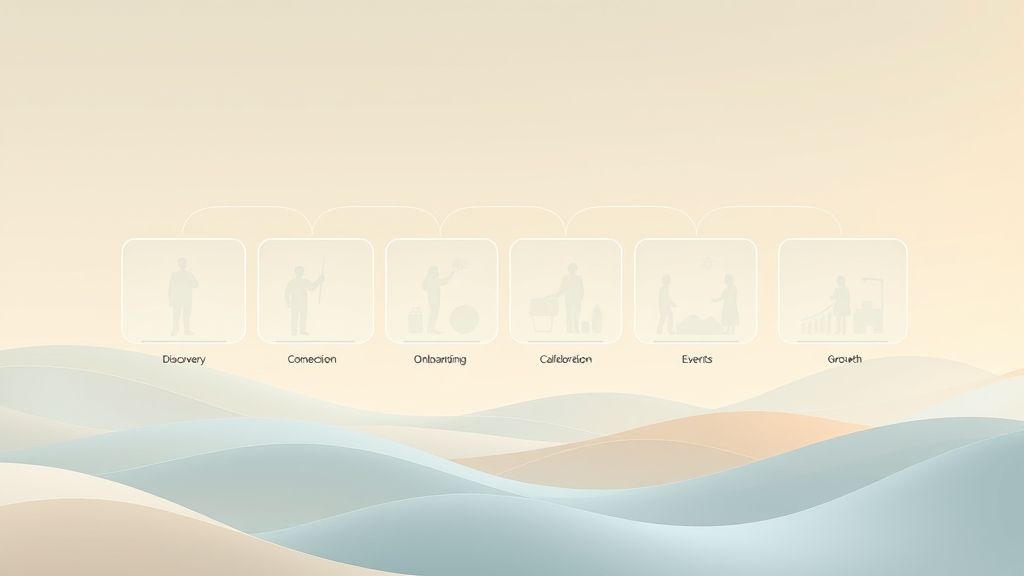
In a nomadic life, the difference between scattered connections and a thriving network often comes down to a repeatable process. A clear workflow helps you assemble destination-specific communities, nurture collaborations, and land gigs without reinventing the wheel at every stop. By designing a compact rhythm that spans discovery, engagement, and outcomes, you can scale your nomad groups across Bali, Chiang Mai, or any new city with confidence. Recent trends show digital nomads increasingly rely on structured online communities to coordinate coworking, events, and gigs, making a disciplined workflow essential for sustainable remote work.
This section provides a practical, hands-on blueprint you can implement now. It incorporates a 45-day onboarding rhythm, platform choices, content cadence, and a simple outcomes-tracking system. As you read, imagine adapting each step to a new destination and updating your templates for local realities and costs.
Step 1 – Define goals
Start with a concrete goal statement for the group in each destination. Decide whether you’re pursuing collaborations, companionship, gigs, or a blend. Tie goals to measurable outcomes you can track over time: number of meetups joined, number of collaborator connections made, gigs landed, or even coworking discounts secured. A sample goal might be: “Achieve 6 collaborator connections and 2 confirmed gigs within 90 days, with 2–3 in-person meetups per destination.”
To keep teams aligned, document goals in a shared living document and assign a 1–person owner for monthly reviews. For pacing, plan 2–3 months per destination as a practical rollout window, recognizing that core destinations like Bali (costs around $1,300/month) and Chiang Mai (around $900/month) often shape group size and cadence. These benchmarks help calibrate what “success” looks like in practice and guide your onboarding and moderation practices.
Step 2 – Pick core platforms
Choose a core toolkit that balances discovery, networking, live events, and internal coordination. The recommended stack includes:
- Facebook Groups for community discovery and ongoing discussions
- LinkedIn for professional networking and gigs outreach
- Meetups for live events and speed-building trust
- Slack for destination-specific coordination and quick collaboration
- Zoom for virtual meetups and collaboration calls
- Google Docs for a shared library of templates, resources, and meeting notes
These platforms align with current market usage among nomads and remote workers, supporting both broad community growth and targeted professional opportunities. In practice, many nomad hubs rely on Facebook Groups to surface new members, then funnel them into deeper, profession-focused conversations on LinkedIn and Meetups, with Slack/Zoom/Docs keeping the day-to-day work flowing smoothly.
Step 3 – Create an onboarding plan
Implement a 45‑day onboarding rhythm with a two-tier welcome. The public tier is a welcoming post that introduces the destination, the group’s purpose, and a few starter prompts. The private tier is a dedicated onboarding channel where newcomers complete a brief intake, share goals, and select their initial collaboration interests. A concrete rhythm might look like this:
- Days 0–7: Public introduction post and a 3‑question onboarding form (goal, interest, region lapse).
- Days 8–21: Pair introductions and a 2‑week mini‑challenge (e.g., attend 1 local meetup or 1 co‑working day).
- Days 22–35: Facilitate 2 small group collaborations or a co‑hosted event.
- Days 36–45: Review outcomes, log connections, and plan next 45‑day phase.
Sample templates you can adapt:
- Public intro post template: “Hey nomads in {City}! I’m {Name}, a {profession} exploring local coworking, gigs, and new friends. My goals here are to connect with {professionals/creatives}, join {X} meetups this month, and explore {specific gigs or collaborations}. What are your must-attend events this month?”
- Private onboarding channel welcome message: “Welcome, {Name}! Please share your goals, preferred collaboration style, and any gig interests. You’ll be matched with a peer buddy for the first 14 days and added to a destination-specific Slack channel for ongoing coordination.”
Use a Buffer-engineered onboarding example for scale: in one pilot, a platform-driven onboarding effort attracted 1,500 applications, demonstrating the power of a well‑designed 45‑day rhythm when combined with a clear two-tier welcome process.
Step 4 – Structure your groups
Organize around destinations with a lightweight, scalable structure that minimizes friction and maximizes engagement. Build destination-specific Slack channels, a shared Google Docs library, and a monthly live virtual meetup. Consider this practical structure:
- Slack: #dest-city-general, #dest-city-cohosting, #dest-city-events, and #dest-city-gigs
- Google Docs: a single library for onboarding templates, event calendars, gig postings, and partner discounts
- Monthly live meetup: a recurring Zoom session with a local host and 1–2 guest speakers
Sample onboarding templates and recurring prompts can be pre-approved and refreshed quarterly to reflect local conditions, such as coworking budgets, coworking discounts, and regional travel logistics. Destination hosts should be identified early, with clear moderation roles and escalation paths to handle disputes or spam.
Step 5 – Content & cadence
A steady cadence keeps the group vibrant and useful. Plan to publish two community prompts per week and schedule a monthly collaboration call. A simple content calendar helps teams stay aligned and avoids burnout. For example:
- Week 1: Prompt about preferred collaboration topics and a “spotlight” feature on a local nomad partner
- Week 2: Prompt about talent needs (e.g., designers, developers) and a call for gig opportunities
In addition to prompts, run a monthly collaboration call and publish a biweekly digest in the private onboarding channel summarizing progress, upcoming events, and new gigs. The cadence should be reflected in a shared calendar and a lightweight content calendar in the Google Doc library.
Step 6 – Track outcomes
Keep a simple, auditable log of outcomes: new contacts, collaboration leads, coworking discounts, and travel milestones. Review metrics monthly to adjust goals and tactics. A basic tracking framework includes:
- New contacts added to the Slack channels and LinkedIn connections
- Collaboration leads and co-hosted projects
- Coworking discounts negotiated or activated
- Travel milestones (days in-destination, notable stops, and meetup attendance)
Monthly reviews should capture lessons learned, moderation needs, and any platform changes—especially as tools evolve. For example, emerging platform updates can shift how communities surface events, so build in a quarterly review of platform features and pricing changes.
Implementation blueprint (at a glance)
The blueprint distilled from the section data emphasizes delivering value quickly, with a predictable ramp in a destination-based cadence. Define goals around collaborations and gigs, select a core platform mix (Facebook Groups, LinkedIn, Meetups, Slack, Zoom, Google Docs), run a 45‑day onboarding program, build destination-specific Slack channels and a shared Google Docs library, publish a twice-weekly prompt, host a monthly live meetup, and track new connections and opportunities. Moderation roles should be defined early to address issues as they arise. In practice, this approach scales across destinations with 2–3 months per destination pacing, and it aligns with real-world pricing and viability patterns observed in nomad hubs, such as Bali and Chiang Mai, where cost of living benchmarks influence group size and engagement strategies. A representative example is how a large tech company’s internal mobility program attracted thousands of applicants when piloting structured nomad onboarding and collaboration pathways.
What this looks like in practice: a quick data-informed snapshot
Across destinations, expect gradual growth in group activity and a shift toward more formal collaboration channels. Bali commonly cites monthly living costs around $1,300 for many nomads, which informs a practical balance between social events and work-focused gigs. Chiang Mai remains a strong value play at roughly $900 per month, influencing expectations for coworking passes, meetup budgets, and local partner discounts. The combination of LinkedIn and Meetups often provides the strongest pipelines for gigs, while Slack/Zoom/Docs keep the internal workflow lean and effective. And while platform dynamics evolve, the core habit of a two-tier onboarding and a structured monthly meetup remains a reliable backbone for sustaining momentum. For teams piloting this approach, the pattern has successfully scaled from pilot communities to multi-destination networks within months, echoing observed outcomes in large-scale nomad programs.
Nomads Use Social Media Groups for Remote Work

Nomadic communities rely on digital ecosystems that blend space, social connection, and practical collaboration. Research into coworking networks shows that models like Selina create spaces where work, lodging, and social events fuse into an ongoing community experience, helping nomads turn what could be transient stays into sustained connections across destinations. In practice, nomads increasingly lean on professional networks like LinkedIn and in-person anchors like Meetups to generate opportunities, while asynchronous tools such as Slack, Zoom, and Google Docs enable collaboration across time zones. Context matters: when budgeting for destinations like Bali (roughly $1,300 per month) and Chiang Mai (around $900 per month), the cadence of events and the choice of platform shapes how groups stay active and productive across a nomad itinerary.
With a practical toolkit in hand, communities can systematically leverage Facebook Groups, LinkedIn, Meetups, Slack, Zoom, and Google Docs to sustain momentum, deepen peer support, and surface remote-work opportunities. The following platform-by-platform guide translates research into actionable steps that nomads can implement today, whether coordinating a Bali meetup or onboarding a group in Chiang Mai.
Facebook Groups: Community discovery and informal collaboration
Facebook Groups remain a central hub for discovering local nomad communities and coordinating informal collaboration. The aim is to move new arrivals from “visitor” to “participating member” through clear onboarding and ongoing dialogue. In practice, follow these steps:
- Join destination-specific nomad groups and micro-niches (e.g., Bali nomads, Chiang Mai digital nomads, remote-work communities focused on design or development). Look for groups with recent activity and clear posting guidelines.
- Establish a warm onboarding thread and a simple posting template (introduce yourself, share one collaboration goal, suggest a meet-up idea). Pin the template so newcomers can replicate it easily.
- Set community norms that emphasize respect, value creation, and safe collaboration. Post guidelines for informal problem-solving, skill shares, and peer introductions.
- Use casual threads to coordinate small, recurring activities—casual coworking sessions, language exchanges, or skill-sharing rounds—without requiring formal schedules or paid dues.
- Track momentum with a lightweight calendar post, inviting members to propose topics and facilitators for 60–90 minute sessions each week or month.
LinkedIn: Professional networking and opportunity sharing
LinkedIn has become a core channel for professional visibility and opportunity flow among nomads. Employers, collaborators, and clients frequently search for remote talent with real-world experience and a demonstrated track record. Leverage LinkedIn as a structured, professional layer atop broader community activity:
- Optimize your profile to reflect remote-work experience, location flexibility, and the specific destinations you frequent (e.g., Bali, Chiang Mai) to surface relevant opportunities.
- Join nomad-focused groups and follow pages that highlight remote-work gigs, co-working partnerships, and housing-for-work bundles. Engage with posts that showcase real projects and case studies from peers.
- Publish short updates about opportunities you’re aware of or projects you’re recruiting for, and invite connections to comment or message you directly. Use native search to identify roles or collaborations in your destination networks.
- Use InMail or direct messages to reach potential collaborators, mentors, or hosts in a personalized, value-driven way—avoid generic outreach and focus on how you can contribute.
- Document outcomes in a simple shared knowledge base (see Google Docs) to help others learn from successes and missteps alike.
Research note: Nomads increasingly rely on LinkedIn and Meetups for networking, while Selina-style networks provide in-person anchors that deepen trust and collaboration across destinations. These patterns inform how a member should sequence online outreach with face-to-face engagement.
Meetups: Live events to build real-world connections
Live Meetups translate online connections into tangible relationships. Regular, well-planned events create a rhythm that supports travel plans and budget realities. Steps to maximize Meetups as a tool:
- Search for nomad- and coworking-focused Meetups in your current or target destination (Bali, Chiang Mai, Lisbon, etc.). Prioritize groups with consistent calendars and clear safety guidelines.
- Host monthly or biweekly gatherings that mix informal co-working with social time—coffee talks, “cowork + lunch,” or “skills swap” sessions. Set expectations for attendance and a friendly, inclusive vibe.
- Coordinate with local hosts or coworking spaces to reserve a venue and a short welcome segment for newcomers. Consider a 60–90 minute format to fit busy itineraries.
- Export or sync the Meetup schedule to your Slack or Google Docs for ongoing coordination, so participants know where to go and when to gather.
- Budget-aware planning: in high-demand destinations, Plan a cadence that aligns with typical nomad cohorts—monthly events can be sustainable in Bali’s higher living-cost context and in Chiang Mai’s more moderate-cost environment.
Slack: Asynchronous collaboration with destination channels
Slack serves as the asynchronous backbone for ongoing collaboration. Destination channels turn scattered conversations into a persistent, searchable knowledge base that travels with a group across flights and months. Practical steps to implement:
- Set up a dedicated workspace or reuse an established one with channels for each destination (e.g., #bali-digital-nomads, #chiang-mai-coworkers) plus cross-cutting topics like onboarding, projects-in-progress, and buy-sell-swap.
- Post an onboarding thread in the welcome channel with a templated checklist: introduce yourself, share your current project, and note your next meetup or milestone event.
- Encourage short, frequent posts rather than long threads. Use threads to keep side conversations organized and searchable.
- Integrate with Google Docs for templates, budgets, and knowledge bases so information is centralized and easy to reference in real time.
- Respect time zones by setting “core hours” channels where teams expect live responses, while leaving other channels open for asynchronous updates.
Zoom: Virtual meetings and onboarding sessions
Zoom is a reliable mechanism for onboarding, training, and virtual town halls, especially when traveling between destinations creates gaps in in-person touchpoints. Actionable usage tips include:
- Schedule recurring onboarding calls for new members joining a destination group, with a brief agenda and a shared resource pack.
- Use Zoom meetings for short “coffee chat” sessions and larger town halls that invite Q&A, with recordings stored in a shared Google Drive folder for those who cannot attend live.
- Create smaller breakout rooms for collaborative problem-solving or peer mentoring sessions, then rotate hosts to distribute leadership opportunities fairly.
- Enforce security best practices (passwords, waiting rooms, and limited screen-sharing) to keep sessions productive and accessible to remote participants in different time zones.
- Link Zoom sessions to the broader knowledge base so transcripts and summaries become part of the living docs for the group.
Google Docs: Shared docs, templates, and knowledge bases
Google Docs acts as the centralized knowledge base and collaboration backbone. Use templates to standardize onboarding, budgeting, and event planning, ensuring consistency as groups travel or scale:
- Create a living onboarding manual with sections on destination basics, housing tips, coworking options, and safety resources. Grant access to active members and maintain edit permissions for the core organizers.
- Develop templates for event planning, budget tracking, and skill-sharing swaps. Keep a shared archive of past meetups and outcomes for easy reference.
- Use Google Sheets for simple budgeting per destination, including average monthly costs, typical event budgets, and a running tally of shared expenses during group activities.
- Embed links to Slack channels and Zoom recordings to keep everything interconnected and easy to navigate for new members.
- Protect sensitive information by setting appropriate sharing permissions and routinely auditing access rights for veteran members passing through different destinations.
Toolkit snapshot
Frequently Asked Questions About Social Media Groups For Nomads

Social media groups are more than simply online forums for nomads; they serve as real-world onboarding networks, collaboration hubs, and planning tools that bridge time zones, visa rules, and cost of living. This section synthesizes current data and practical experience to help you set up and participate in nomad groups that support remote work across destinations like Bali and Chiang Mai.
The guidance below reflects widely observed patterns in professional networks (LinkedIn and Meetups for networking), community spaces (Facebook Groups), and coordination tools (Slack, Zoom, Google Docs) that nomads increasingly rely on to stay productive and connected.
Which platforms are most effective for nomad groups?
For networking and professional connections, LinkedIn and Meetups are consistently cited as the most effective platforms. LinkedIn helps you surface projects, connect with potential clients, and join destination-focused groups, while Meetups facilitate in-person or hybrid coworking and collaboration events. For community-building and peer support, Facebook Groups are the go-to space where nomads share housing tips, safety alerts, and local recommendations. For day-to-day coordination, Slack, Zoom, and Google Docs are the workhorses that keep asynchronous planning, real-time check-ins, and document sharing flowing smoothly across continents.
How long should onboarding take?
Onboarding for nomad groups tends to unfold over a multi-week rhythm, with a typical benchmark around 45 days to get integrated into a new destination and group routines. This window supports identifying credible hosts, establishing peer mentors, and aligning on shared tools and safety practices. The timeframe also helps new members build meaningful connections before taking on heavier travel loads.
To structure onboarding effectively, consider a simple rhythm: weeks 1–2 orientation and profile setup, weeks 3–5 trial collaboration projects, weeks 6–8 core participation and first joint coworking session, weeks 9–12 deeper commitments, and a rolling review at week 45 days.
Practical tip: codify onboarding milestones in a shared doc so everyone understands expectations and deadlines, reinforcing the momentum described in the data about integration timelines.
What kind of outcomes can groups drive?
Nomad groups frequently translate online connections into tangible benefits: collaboration opportunities on client projects, gigs found through peer networks, coworking recommendations that cut search time, and cross-time-zone teamwork enabled by asynchronous tools. When groups align on a shared time zone strategy and document workflows in Google Docs or similar tools, teams can complete complex tasks across continents without overlap friction.
As observed in real-world patterns, these outcomes are easier to realize when the core platforms are used as intended: LinkedIn for professional visibility, Meetups for active networking, Facebook Groups for community signals, and Slack/Zoom/Docs for ongoing coordination.
What are the common risks to watch for?
Key risks include safety concerns, health issues, burnout, and visa/legal complexities. Groups should plan ahead with visa checks, healthcare considerations, and emergency funds, as well as clear guidelines on safe meetups and responsible travel. Establishing crisis contacts, local embassy resources, and a shared emergency fund can mitigate these risks and support sustainable travel patterns.
Healthy pacing and transparent risk reporting help prevent fatigue and misaligned expectations, ensuring that the benefits of group participation aren’t undermined by avoidable hazards.
How should I pace travel and group activity?
To counter fatigue and maintain productivity, a cadence of about 2–3 months per destination is often recommended. Budget anchors, such as Bali at roughly $1,300 per month and Chiang Mai around $900 per month, guide initial planning and help set realistic expectations for living costs and coworking needs. Planning with these benchmarks in mind supports steady energy, consistent work output, and timely visa checks when applicable.
In practice, adopt a destination loop: spend 8–12 weeks in a place, then reassess housing, coworking access, and local safety considerations before moving on. The data-backed approach helps balance exploration with professional continuity.
What are real-world examples to learn from?
A concrete anchor comes from a Buffer engineer who documented a period of 1,500 applications and a 9+ month stretch away from Vienna. This example illustrates the scale of onboarding, the importance of a robust support network, and the need for flexible, asynchronous collaboration tools to sustain a long-term remote assignment. Real-world case studies like this underscore the value of having documented onboarding rhythms and cross-destination coordination practices.
Bottom line: By combining platforms for networking (LinkedIn, Meetups), community (Facebook Groups), and coordination (Slack/Zoom/Docs), nomad groups can unlock consistent collaboration, informed travel pacing, and resilient planning—even across multiple time zones and changing visa landscapes.
Nomads Use Social Media Groups for Remote Work

Social media groups have become a practical compass for nomads planning a move. They offer timely signals on costs, connectivity, and coworking quality that you won’t always find in glossy destination guides. In Bali and Chiang Mai, for example, group chatter helps validate a budgeting anchor — Bali around $1,300 per month and Chiang Mai around $900 per month — and points to which neighborhoods, spaces, and networks reliably support remote work. This section maps a step‑by‑step playbook to research, select, and thrive using social groups, with templates you can reuse for each new stop.
Across a 9+ month real‑world move example from Vienna, the pattern holds: use onboarding cycles, build local ties before you arrive, and stitch together a personal network that sustains both work and life. The approach blends data from nomad communities, coworking networks like Selina, and local Meetups with a disciplined rhythm for pacing and safety. Read on for concrete steps, templates, and data points you can trust as you plan your next destination.
Destination validation with social groups
Start by researching two anchor destinations and then expand as you learn. Bali typically emerges as a cost and infrastructure anchor around $1,300 per month for a comfortable, work‑friendly lifestyle, while Chiang Mai often sits near $900 per month for comparable setups. Use group threads to confirm these ranges against your personal style and desired city layout, then triangulate with additional sources inside the same time window to ensure you aren’t chasing outlier reports. While numbers vary by neighborhood and apartment type, these anchors help you model a realistic budget and compare space quality, Wi‑Fi reliability, and access to ergonomic work areas.
As you verify, extract signals about infrastructure: the reliability of local internet providers, the availability of long‑term rentals, and the density of coworking hubs. Real‑world postings from nomad groups also surface practical frictions—like power outages or heat‑and‑humidity considerations—that can affect hardware choices and comfort. A credible playbook synthesizes these group insights with a few external checks and a clear plan for testing spaces before you commit.
Networking with Selina and local Meetups
Leverage established coworking networks such as Selina to spot ergonomic spaces, reliable Wi‑Fi, and community events in Bali and Chiang Mai. Selina’s global footprint often means standardized coworking setups, predictable streaming conditions, and a baseline of peers who can become collaborators or mentors. Pair this with local Meetups to discover project partners, language exchanges, and informal ping‑pong scheduling for collaboration sessions. The goal is not just to rent space, but to embed yourself in a dependable network of access points—both physical and human—that support remote work across time zones.
To implement, search your preferred platforms for Bali and Chiang Mai coworking calendars and Meetup rosters, then earmark 2–3 venues and 2–3 meetups per destination for a two‑week pilot. Track which spaces maintain solid Wi‑Fi during peak hours and which Meetups yield meaningful introductions for your field or collaboration ideas. Collect notes on hours, desk ergonomics, and quiet zones to feed your destination playbook with concrete, reusable criteria.
Movement pacing and visa planning
- Plan 2–3 months per destination as your core testing window. Use the window to validate cost anchors, space quality, and community fit, then decide whether to stay longer or pivot.
- Map visa and work‑permit requirements early. Some destinations allow modest stays or digital nomad visas with straightforward documentation; others require more preparation or local sponsorship. Create a simple visa checklist you can reuse for each new city.
- Apply a 45‑day onboarding rhythm to each stop (see the next subsection) and schedule early feedback loops with your new network. This cadence helps you catch gaps in infrastructure, safety, or coworking access before you scale your stay.
In practice, this pacing supports sustainable long‑term moves beyond a single city, making it easier to flow between destinations while preserving income continuity and personal safety. A well‑timed approach also aligns with the onboarding rhythm used by many nomads who test a new base, gather feedback, and then decide whether to extend or adjust their plan.
Building a local network before you move
Proactively join LinkedIn groups and Meetup events for Bali and Chiang Mai well in advance of your travel dates. Identify potential collaborators, co‑working partners, or service providers you might rely on when you land. A few targeted outreach messages can yield introductions to potential collaborators, translators, or co‑working teammates who share your industry and time zone needs. Create a short outreach template you can reuse across destinations: introduce yourself, mention your work focus, state the window you’ll be in town, and propose a low‑risk collaboration (a joint project, a trial work session, or an info coffee).
- LinkedIn groups to join: remote work, digital nomads, and local business networks for your destination.
- Meetup topics to scout: coworking mornings, tech talks, language exchanges, and professional meetups related to your field.
- Outreach template (short): “Hi [Name], I’ll be in [City] from [date range]. I’m exploring potential collaboration on [your project], and I’d love to learn about the local coworking scene and any intro to people in [field]. Would you be open to a 20‑minute chat?”
These steps help you assemble a preliminary crew before you arrive, reducing the friction of starting from scratch in a new city.
Onboarding rhythm and data collection
Apply a 45‑day onboarding rhythm to each destination and collect feedback on group usefulness and safety considerations. Day 1–15: validate internet reliability, housing quality, and coworking access; Day 16–30: test a routine—daily standups at a coworking space, weekly meetups, and short collaborations with locals; Day 31–45: consolidate partners, finalize a preferred set of spaces, and document safety notes (neighborhood safety, emergency contacts, healthcare access). Use a simple feedback form to capture: space quality, internet uptime, cost accuracy, safety concerns, and potential red flags in the social groups you’re relying on. This data becomes the backbone of your personal destination playbook and helps you recalibrate quickly if a place underperforms.
Destination playbook templates
Use ready‑to‑copy templates to standardize your planning across destinations. Include these core documents in your playbook:
- Visa checklist template: passport validity, photos, invitation letters (if needed), proof of funds, sponsorship or remote‑work authorization, insurance confirmation, local address (or hostel booking) and plan for extension if required.
- Emergency funds template: 3–6 months of living expenses, stored in multiple savings instruments and currencies, plus a portable card plan for international expenses.
- Health insurance considerations: international coverage, continuity with local healthcare providers, and how to extend coverage during extended stays; verify if pre‑existing conditions are covered and whether telemedicine is available across destinations.
Cost anchors and infrastructure snapshot
Real‑world case studies underpin this approach: long‑term moves, like departing Vienna for multiple destinations over a year, reveal the value of a structured onboarding rhythm, prepared visa paths, and cultivated local networks. By anchoring decisions to concrete data points from social groups, nomads reduce guesswork and increase the reliability of spreading work across several destinations without sacrificing safety or productivity.
Safety, wellbeing, and legal considerations for nomad groups

Social media groups have become essential lifelines for remote workers navigating visa rules, healthcare access, and local safety while on the move. Recent research indicates the global digital nomad population is expanding rapidly, with estimates suggesting more than 50 million location-independent workers by 2025, and a growing landscape of remote-work visa programs across 40+ countries. This momentum makes well-structured communities more valuable than ever, but it also raises risk: visa complexities, health coverage gaps, and burnout from constant travel. In this section, we outline practical guardrails that help groups harness connectivity without compromising health, legality, or resilience. Real-world anchors—such as long-duration stays 9+ months away from Vienna and onboarding cycles around 45 days—underscore the need for formal processes that scale with membership.
By grounding group activity in measurable wellbeing and legal safeguards, nomad communities can improve stability and safety for members while maintaining a pragmatic path to remote work. The emphasis here is on implementable steps: checklists, shared resources, and structured routines that translate research insights into everyday practice. Wellbeing metrics, documented visa rules, and predictable routines become the backbone of a future-ready community that supports both health and visa compliance.
Visa and work-permit checks
Before any move, implement a rigorous, multi-source visa and work-permit verification process. A single post or personal anecdote is rarely enough; cross-check official government portals, embassy advisories, and the latest employer or program guidelines. Create a shared, continually updated resource in the group to document visa rules for each destination—entry requirements, duration, work permissions, and renewal steps. This resource should be structured as a living document accessible to all members and updated by designated moderators or a rotating “visa steward.”
Action steps you can implement now:
- Assign a visa steward responsible for collecting official sources and posting updates in the group weekly.
- Document at least two independent sources for each destination (e.g., government site + reputable mobility service) and note discrepancies or recent changes.
- Define destination-specific checklists (entry, work-permit, tax implications, healthcare coverage) and attach them to member profiles in the group directory.
- Set a 45-day onboarding window for new members to review rules, confirm eligibility, and align on expected travel timelines.
- Flag any changes in visa rules that could affect planned stays (e.g., length-of-stay limits, online-work allowances, or visa renewals) and alert members immediately.
Research anchors confirm that visa landscapes are evolving quickly, with many countries expanding remote-work options but tightening documentation or eligibility criteria. Translating this into a transparent, shared resource helps prevent costly detours and last-minute visa scrambles. In practice, a long-duration onboarding thread—think 45 days—helps new members absorb the rules and avoid risky assumption-based travel.
Wellbeing and burnout prevention
Traveling while staying productive can blur work and life boundaries. Communities that bake wellbeing into their rhythm see lower burnout, steadier energy, and more sustainable participation. Adopt mindful online habits, implement digital decluttering, and establish structured routines that anchor health even on busy travel weeks. For instance, establishing wake-up targets and consistent daily patterns reduces decision fatigue and supports physical and mental health on the road.
Practical steps to integrate wellbeing into group life:
- Encourage mindful online habits—set specific windows for checking messages and social feeds separate from focused work time.
- Promote digital decluttering by hosting monthly reviews of notifications, subscriptions, and redundant apps, with group guidance on what to keep or prune.
- Implement a structured daily routine, such as wake-ups near 7:05 a.m., followed by a short planning session to set intentions for the day.
- Share simple self-care routines—short walks, 15-minute stretches, and brief mindfulness breaks—into group posts so members can adopt small, scalable practices.
- Encourage accountability partners for fitness, sleep, and screen-time goals to foster a supportive peer environment.
Wellbeing data from nomad-focused research highlights the importance of predictable routines and mental health supports as a standard part of long-term stays. When a group tracks wellbeing signals—sleep quality, stress levels, and energy—members can flag early warning signs and prevent chronic burnout, especially during longer itineraries or when visa delays disrupt plans.
Emergency fund planning
Financial resilience is the cornerstone of security for nomads facing income volatility, visa delays, or medical costs. A target of a 3–6 month emergency fund helps cover essential expenses during gaps or unexpected events. In practice, groups can provide a framework for calculating, saving, and tracking this safety net without imposing rigid rules that stifle mobility.
Implementation ideas:
- Define “essential expenses” for each member (housing, food, healthcare, connectivity, local transport) and publish a member-specific baseline in the group directory.
- Recommend a conservative savings target: 3–6 months of essential expenses, adjusted for cost-of-living variability across destinations.
- Facilitate a shared savings plan or recommended banking approach (e.g., separate emergency fund accounts, automated transfers, and quarterly reviews).
- Encourage quarterly wellbeing and financial health check-ins to ensure the fund remains aligned with current travel plans and income patterns.
- Bundle fund-status updates with visa timelines, so members know when a delay might affect liquidity and how to adjust plans proactively.
Emerging data show nomads increasingly rely on planned financial buffers as visas lengthen or shift timelines. By codifying emergency fund targets and tracking progress, groups reduce panic moments and maintain steady participation even when the road gets rocky.
Safety networking
Local Meetups and LinkedIn connections are powerful tools for security awareness, healthcare access, and trusted service provision. Proactive networking helps members learn practical safety tips, locate reputable doctors, and identify reliable regional providers—without relying solely on scattered social posts.
Recommended practices:
- Curate a “local safety and health” playbook with trusted providers, emergency numbers, and hospital guidance for common destinations.
- Encourage members to connect with in-destination groups or local chapters via verified Meetups to learn about safe neighborhoods and transport norms.
- Use LinkedIn or professional networks to verify credentials of healthcare professionals or security vendors and share vetted contact lists in the group.
- Promote two-person meetups for early in-destination introductions, especially in unfamiliar locales or during evening activities.
- Publish a standard “security tips” post series and invite members to contribute region-specific advice, red flags, and practical safeguards.
Aggregated experiences from remote-work communities show that strong local networks dramatically improve access to timely healthcare, reduce risk, and provide fast channels for information about safety incidents. A structured approach to safety networking helps members translate online trust into in-person security and care.
Group-based risk mitigation
Communities thrive when they publish clear safety guidelines and a moderation plan for scams or low-quality events. A transparent framework reduces misinformation, protects members’ finances, and sustains trust over time.
Core actions to implement:
- Publish a concise safety policy covering scam awareness, event verification, and payment protections, with examples of red flags to watch for.
- Develop a moderation plan that designates roles (moderators, reporting contacts, escalation paths) and a documented process for handling complaints or dangerous situations.
- Maintain a simple event vetting checklist (venue legitimacy, accessibility, safety considerations, and refund policies) and require hosts to share this in advance.
- Institute a reporting mechanism for scams or misleading postings, and ensure timely responses from admins or trusted volunteers.
- Schedule quarterly risk reviews to refresh guidelines in light of new destinations, visa changes, or emerging scams.
Strong risk-mitigation practices build a resilient community where members can participate with confidence, knowing there is a clear path to address concerns and remove harmful content or experiences quickly.
Sustainability and future-readiness
Long-term viability depends on tracking wellbeing, outcomes, and costs while tying group activity to broader sustainability goals. By measuring wellbeing metrics through regular surveys and aligning events with cost containment and responsible practices, groups can demonstrate value to members and supporters alike.
Action points for groups:
- Implement periodic wellbeing surveys to assess stress levels, sleep quality, and overall health, and publish anonymized results to guide programming.
- Link activity to sustainability reporting—track attendance, travel footprints, and cost per event to identify opportunities for greener practices and budget optimization.
- Use data to forecast future needs, such as gaps in healthcare access or visa-support services, and plan onboarding or training to address them.
- Align onboarding or orientation cycles with research-backed insights (e.g., 45-day onboarding windows) to ensure new members assimilate safety, health, and legal protocols.
- Share success stories and lessons learned to illustrate how structured routines, safer travel, and proactive planning reduce risk over time.
In a landscape where the nomad population is expanding and visa options are multiplying, sustainable, data-informed groups offer a stable platform for remote work. When wellbeing metrics, visa checks, and routine structure are integrated into daily practice, communities can grow responsibly—supporting both individual health and collective resilience for long stays, including scenarios like nine months away from familiar bases such as Vienna, with onboarding cycles around 45 days.
Conclusion
Social media groups provide a practical backbone for nomads, turning scattered destinations into connected ecosystems that support work, health, and growth across time zones. By pairing platform-specific actions (LinkedIn for networking, Meetups for events, Slack/Zoom/Docs for coordination) with destination context (Bali and Chiang Mai budgets, 2–3 month pacing) and a clear onboarding rhythm (45 days), you can build resilient communities that sustain momentum wherever you roam.
Estimates place the global digital nomad population around 40 million worldwide, a signal that coordinated groups can reach and sustain. Start small, test what works, and scale with intention.
- Two-core-platform focus: begin with LinkedIn for professional networking and Meetups for live engagement, then layer Slack/Zoom/Docs for ongoing coordination.
- 45-day onboarding: map onboarding milestones to 2–3 month cycles for Bali and Chiang Mai budgets, with clear owner roles.
- Shared workspace: create a Slack workspace with destination channels and a Google Docs library for templates, budgets, and guides.
- Measure outcomes: track onboarding progress at 45 days and 90 days, refine, then expand with a second destination group.
Call to Action: Choose two core platforms to start (LinkedIn and Meetups), implement a 45-day onboarding plan, and set up a Slack workspace with destination channels plus a shared Google Docs library. Track onboarding progress and 90-day outcomes, then scale by adding a second destination group.
Take the first step today, document what works, and invite others to join—your future nomad community will thank you.
In closing, build with intention and let the next destination be a connected, thriving hub for remote work.
Dream big. Start now, and make every time zone a strength.